
If you are evaluating MT4 robots with a long-term, process-driven mindset, AI MEDUSA EA V2.95 MT4 is worth a deeper look. Instead of leaning on aggressive position-doubling or hyper-scalping, it builds around H1 entries, multi-pair diversification, and strict exit governance—hard stops, realistic targets, and breakeven logic. The objective is not to “win every trade,” but to operate in a professional risk envelope that allows the equity curve to scale in a controlled way as market regimes shift. This guide focuses on how to configure the EA in MT4, structure a forward-testing program, choose symbols intelligently, and keep risk consistent through news cycles and changing liquidity.
The Operating Philosophy: Rules First, Context Aware
At its core, AI MEDUSA strives to separate two things that retail traders often conflate: prediction and risk. Prediction is inevitably noisy. Risk can be engineered. The EA’s value proposition is to keep risk engineered at all times—every order launches with a predefined stop, a measured target, and an optional breakeven mechanism once price progresses. That discipline limits downside tails and compels the system to succeed through trade selection quality rather than through balance-sheet leverage or recovery grids. If you have previously struggled with martingale or unmanaged averaging, this shift in philosophy alone can stabilise your results.
Why H1 Timeframe
The H1 timeframe filters much of the randomness visible on lower charts while preserving enough trade frequency to matter when you monitor several pairs. It also improves the “signal-to-cost” ratio: spreads, commissions, and micro-slippage carry less weight relative to target distances. On H1, stop placement can reference more meaningful structural levels; breakeven adjustments and partial-risk modes are less likely to be whipsawed by a random tick. For traders willing to hold positions across sessions when the setup calls for it, this balance is practical and measurable.
Multi-Pair Reach, One Control Surface
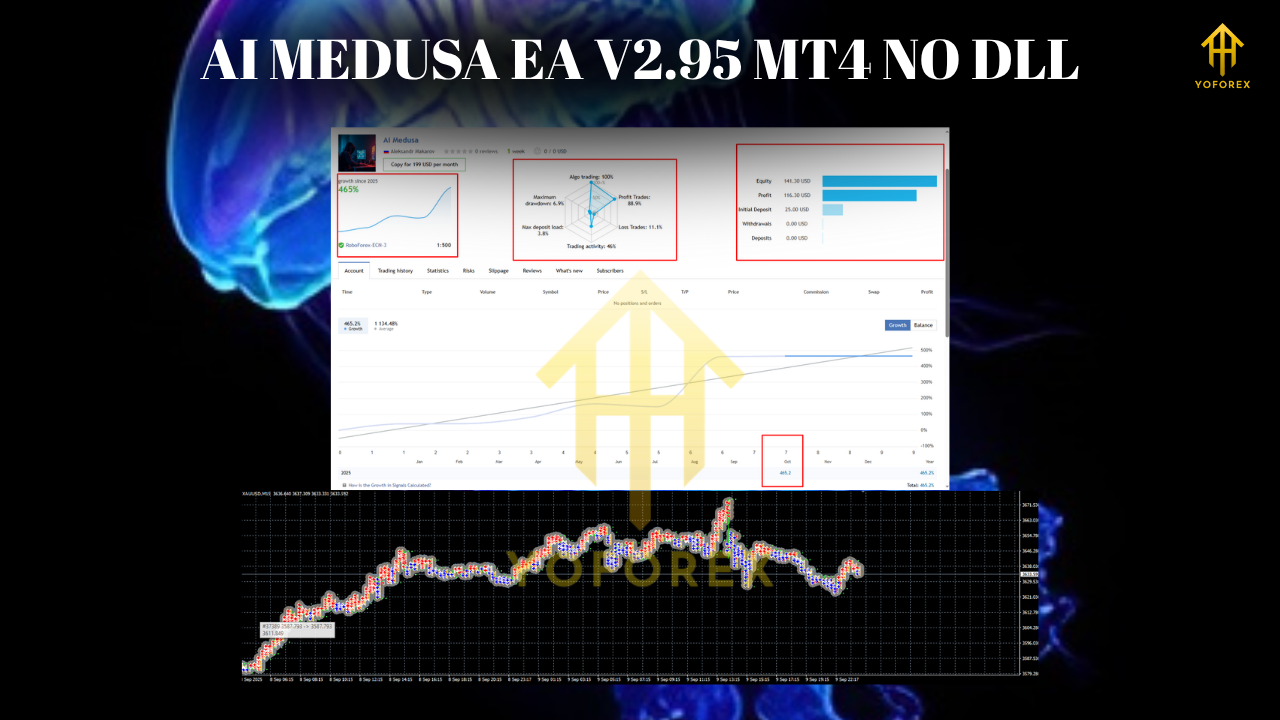
AI MEDUSA’s portfolio orientation is one of its strongest practical features. Attach the EA to the recommended chart, ensure your symbol list is loaded in Market Watch, and manage a curated basket of instruments. The advantage is not “more trades,” but better risk distribution. A dollar major, a yen cross, and a commodity-linked pair may respond differently to the same headline, reducing synchronized drawdowns. The outcome is a smoother equity line provided you enforce exposure limits and avoid opening three trades that all depend on one currency’s direction.
Exact MT4 Setup Steps
- Copy the EA to the Experts directory and restart MT4 so it appears in the Navigator.
- Open the recommended chart on H1 and attach the EA, confirming Algo Trading is enabled.
- Add the pairs you intend to trade into Market Watch to ensure tick detection works across symbols.
- Configure money management: per-trade risk, maximum concurrent positions, and the breakeven trigger plus offset.
- Confirm journal cleanliness (no repeated errors or missing symbol suffixes) and let the platform run uninterrupted during liquid hours.
- If you operate on a VPS, place it close to your broker’s servers; reliable uptime and low latency improve breakeven responsiveness and reduce execution drift.
The Trade Lifecycle, De-Jargonised
- Signal Formation: The EA waits for structured price behaviour on H1—momentum quality, pullback integrity, and level interaction that exceed a minimum threshold.
- Pre-Trade Checks: Spread, session status, and conflict with correlated open positions are evaluated.
- Sizing: Lot size is computed from your risk cap and stop distance, targeting consistency over excitement.
- Order & Protection: The trade deploys with a hard stop at a logical invalidation area and a target aligned to recent volatility.
- Management: If price progresses, the stop may advance to reduce risk or to breakeven. If the structure weakens, the protective stop ends the idea without debate.
- Exit: Positions close by TP, SL, or a managed state when the thesis no longer holds.
Risk Architecture You Can Scale
A capable EA still needs a robust risk framework. Here is a pragmatic baseline to adapt to your capital and temperament:
- Per-Trade Risk: 0.25%–0.75% when several pairs are enabled. If you focus on one pair only, you may raise risk modestly, but never to a level where two losses derail your week.
- Daily Loss Stop: Use a daily cap (e.g., 2R or a fixed percentage). When reached, stop trading. This protects mental capital and prevents “revenge” behaviour.
- Exposure Governance: Limit the number of simultaneous trades that depend on the same currency. If two setups are highly correlated, halve the second position size or skip it.
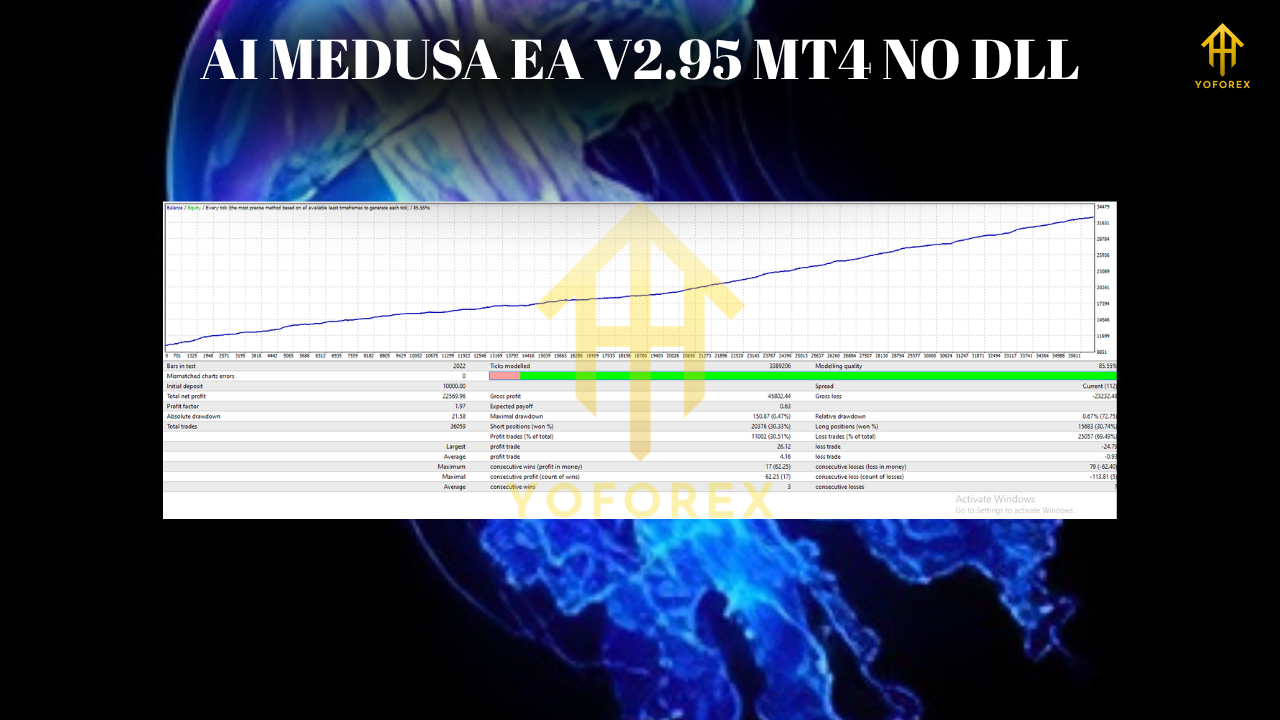
- Weekly Scorecard: Track win rate, average win vs. average loss, profit factor, and max drawdown every Friday. These four numbers reveal if conditions are aligned with your plan.
Symbol Selection: Build a Basket That Behaves
Curate 4–7 symbols that complement each other rather than echo the same macro bet. A simple approach is to mix:
- One or two USD majors for depth and liquidity.
- A JPY cross for a different behavioural rhythm.
- One commodity-linked pair if spreads are reasonable with your broker.
Retire pairs that fail repeatedly under your operating hours, and rotate in symbols that exhibit cleaner H1 structure. Evaluation is continuous; a pair that performed well last quarter can stagnate in a compressive phase.
Session Timing and News Logic
H1 entries can survive typical noise, but spreads may widen and levels can slip around high-impact releases. Until you forward-test how your broker and VPS behave during those windows, bias risk to routine sessions: London, and the London–New York overlap, where liquidity is deeper and follow-through is more credible. If you trade through macro events by design, size down and log outcomes rigorously.
Prop-Firm Use Without Headaches
For evaluations, AI MEDUSA’s rule-first approach is advantageous, but it still requires restraint. Reduce simultaneous positions, choose highly liquid pairs, and set daily stops comfortably below the firm’s daily limit. Forward-test those exact constraints on demo, then mirror them in the challenge account. Evaluation breaches are usually a risk-planning error, not a strategy flaw.
VPS and Broker Factors That Actually Move the Needle
- Latency: Lower latency tightens the alignment between the EA’s instructions and your fills, especially around breakeven moves.
- Stability: Update MT4 during quiet hours and schedule a recurring VPS restart outside your active window.
- Spreads and Commission: Consistency matters more than the absolute minimum. A broker with stable, transparent costs helps your forward-test data remain comparable month to month.
- Execution Quality: Track slippage distribution. If you see persistent adverse slippage on H1, contact support or test an alternate server.
Troubleshooting Guide
- Few or No Trades: Verify symbols in Market Watch, confirm H1, and check that filters are not overly strict for current volatility.
- Frequent Breakeven Stopouts: Increase the distance before breakeven triggers or require stronger progression before moving the stop.
- Correlated Loss Clusters: Enforce an exposure cap so you do not run multiple trades that hinge on the same currency impulse.
- Flat Performance: Retire one lagging pair, increase participation during high-liquidity sessions, and re-evaluate stop/target multiples relative to ATR.
Operating Principles for Consistency
- Let Trades Develop: Interference often converts good ideas into noise.
- Respect the Stop: The stop is the fixed cost of an idea; pay it and move on.
- Measure Weekly, Not Emotionally: Single outcomes are anecdotes; a few dozen trades form evidence.
- Scale Cautiously: If the data is good, nudge risk upward in small increments and keep measuring.
Final Assessment
AI MEDUSA EA V2.95 MT4 aligns with traders who prefer structured, risk-aware operations over speculative intensity. The H1 focus, multi-pair capability, and disciplined exit logic create a framework that can adapt across regimes without relying on fragile tactics. To extract the most from it, combine the robot with professional habits: curated symbol selection, a documented risk plan, reliable VPS uptime, and a weekly scorecard. This is how a capable EA becomes a durable process, and how a durable process becomes a scalable trading operation.
Comments (0)
No comments yet. Be the first to comment!
Leave a Comment