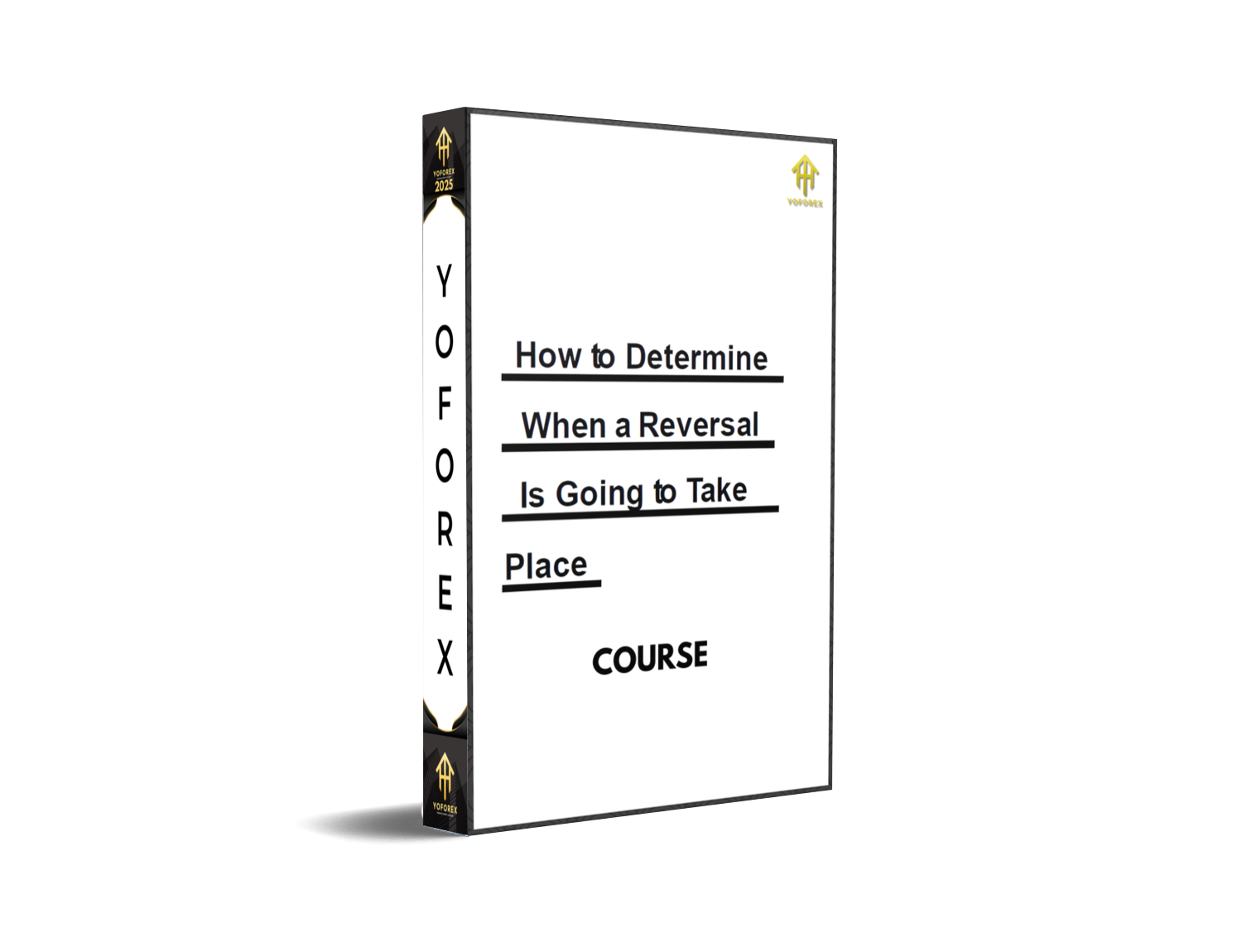
How to Determine When a Reversal Is Going to Take Place – Complete Trading Course
One of the biggest challenges traders face—newbies and experienced pros alike—is knowing when a market is about to reverse. You know the feeling… you enter a strong trend, everything looks perfect, and suddenly the market flips the other way sharply. Or worse, you try to “catch” a top or bottom too early and blow your account coz the trend keeps pushing further.
That’s exactly why a proper Reversal Detection Course matters. Understanding reversal signs gives you an edge that can save your account and increase your profitability. In this in-depth guide, you’ll learn the core methodologies, price-action confirmations, indicator-based tools, and market psychology elements behind identifying a potential reversal before it actually happens.
Whether you trade Forex, Crypto, Gold (XAUUSD), NASDAQ, SP500, or Indices, these concepts apply to all markets. The goal is not to “predict” magically but to recognise when the probability of a reversal is high enough to justify a trade. Let’s dive deep.
What Is a Reversal?
A reversal is a change in the direction of price movement—either from uptrend to downtrend or downtrend to uptrend. Unlike pullbacks (small corrective waves), reversals signal a completely new trend cycle. Identifying this early is one of the strongest professional-level trading skills.
1. Market Structure Breakdown (MSB / BOS)
Reversals often begin with a break in market structure. When the price stops making HH (Higher Highs) in an uptrend or fails to form LL (Lower Lows) in a downtrend, that’s your earliest clue.
Signs inside market structure:
- Uptrend → price fails to make a new Higher High
- A Lower Low appears for the first time
- Downtrend → price fails to make a new Lower Low
- A Higher High appears for the first time
- BOS (Break of Structure) forms with strong impulsive candles
Market structure is raw price action—no indicators, no lagging signals. This should always be your first step in detecting reversals.
2. Reversal Candlestick Patterns
Price always respects psychology. Some well-known candlestick patterns warn that buying or selling pressure is fading.
Most powerful reversal candlestick formations:
• Pin Bar (Hammer / Shooting Star)
Long wick = rejection. Indicates a strong failure to break through.
• Engulfing Pattern
Bullish Engulfing → buyers overpower sellers.
Bearish Engulfing → sellers overpower buyers.
• Morning Star / Evening Star
Classic 3-candle reversal sequence.
• Doji & Long-Legged Doji
Indecision at the top or bottom of a trend signals absorption.
Use candlestick patterns with structure for higher accuracy.
3. Supply and Demand Zones
Another professional way of spotting reversals is by reading institutional footprints.
Supply Zones Indicate Possible Bearish Reversals
These are areas where big sell orders previously pushed price downward aggressively.
Demand Zones Indicate Possible Bullish Reversals
These are zones where heavy buy orders came in earlier.
When price returns to these zones, you often see:
- Rejection wicks
- Sudden momentum shifts
- Break of structure
- Volume spikes
This is one of the highest accuracy tools in trading because institutions (banks, prop firms, hedge funds) are behind these moves.
4. Trendline Break + Retest
A clean trendline break followed by a retest is a classic reversal confirmation.
The sequence:
- Trendline holds for many candles
- Price breaks through it strongly
- Price comes back to retest the same line
- Reversal begins
This is simple yet extremely powerful.
5. Divergence – The Hidden Tool of Professionals
Indicators often lie… except when they start disagreeing with price.
Bullish Divergence
Price makes lower lows
Indicator makes higher lows
→ Trend reversal to upside likely.
Bearish Divergence
Price makes higher highs
Indicator makes lower highs
→ Trend reversal to downside likely.
Best indicators for divergence:
- RSI
- MACD
- Stochastic
- CCI
Divergence works best when combined with key zones like support/resistance or supply/demand.
6. Volume as a Reversal Confirmation
Volume reveals the real story behind the candles.
Volume Clues:
- A trend losing momentum shows decreasing volume
- Reversal candles appear with high volume
- Break of structure + rising volume = strong confirmation
For example, a bearish engulfing candle with huge volume is almost always a legitimate reversal sign.
7. Moving Average Crossovers (Lagging but Reliable)
While MAs are delayed, they still help confirm trend shifts.
Useful combinations:
- 50 EMA crossing 200 EMA → major reversal
- 9 EMA crossing 21 EMA → short-term reversal
- Price closing below 50 EMA after long uptrend
Always use MA crossovers as confirmation, not entry signals.
8. Psychological Levels (Round Numbers)
Reversals often happen around big levels:
- 1.0000
- 1.0500
- 1000
- 2000
- 25000
These levels attract massive liquidity from retail and institutional traders. When price overshoots these numbers and snaps back, a reversal is highly probable.
9. Liquidity Sweeps & Stop Hunts
Many reversals happen because the market hunts liquidity before changing direction.
Signs of a liquidity sweep:
- Price spikes above resistance briefly
- Takes out stops
- Immediately reverses with strong candle
Smart Money Concepts (SMC) traders rely heavily on this technique.
10. Fibonacci Confluence Zones
Reversals tend to form near Fibonacci zones like:
- 61.8%
- 78.6%
- 88.6%
- 1.272 and 1.618 extensions
Combine Fib + structure + volume for accurate reversal detection.
11. Multi-Timeframe Confirmation
Never judge a reversal using just one timeframe.
The formula:
- Higher Timeframe (HTF) → trend weakening
- Mid Timeframe (MTF) → BOS + retest
- Lower Timeframe (LTF) → entry trigger
This reduces false signals massively.
12. How Professionals Confirm a Reversal (Checklist)
Before entering reversal trades, verify:
- Structure break
- Key level or supply/demand zone
- Rejection wick
- Divergence present
- Volume supporting reversal
- HTF alignment
- Clear invalidation level
This multi-point checklist increases accuracy from 40% to 70–80%.
Conclusion
Reversal trading is an art—but one backed by solid logic, structure, psychology, and market data. If you depend on “gut feeling,” you’ll blow your account quickly. But if you combine the concepts above, reversals become predictable, logical, and tradable. And yeah, sometimes the market still fakes you out, coz nothing is 100% perfect. But consistently using these tools will help you avoid unnecessary losses and catch big trend shifts early.
Comments (0)
No comments yet. Be the first to comment!
Leave a Comment