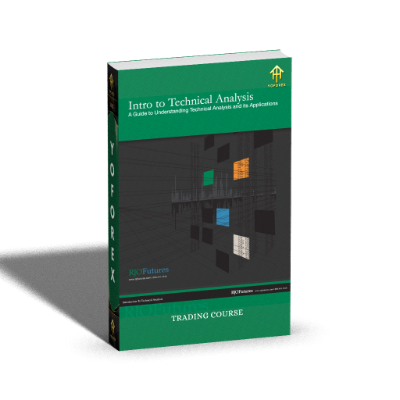
Intro to Technical Analysis: A Beginner’s Guide to Mastering Market Trends
In today’s fast-paced financial markets, understanding how to analyze price movements is crucial for successful trading. Whether you’re interested in stocks, forex, or cryptocurrencies, technical analysis provides a framework to decode market behavior using historical data. This guide introduces core concepts, tools, and strategies to help you build a solid foundation in technical trading.
What Is Technical Analysis?
Technical analysis focuses on studying past market data—primarily price and volume—to predict future price movements. Unlike fundamental analysis, which evaluates a company’s financial health or economic factors, technical analysis assumes that all relevant information is already reflected in the price. Traders use charts, indicators, and patterns to identify trends, reversals, and entry/exit points.
The core principle is simple: history tends to repeat itself. Human psychology drives market cycles, leading to recurring patterns. By recognizing these patterns, traders can make informed decisions without relying solely on news or earnings reports.
Key Concepts in Technical Analysis
1. Price Action
Price action refers to the movement of an asset’s price over time. It forms the basis of all technical analysis. Traders study candlesticks, bars, or line charts to gauge buying/selling pressure. For example:
- Bullish candles (e.g., long green candles) indicate strong buying interest.
- Bearish candles (e.g., long red candles) signal dominant selling pressure.
2. Support and Resistance Levels
- Support: A price level where demand is strong enough to prevent further declines. Think of it as a “floor” holding prices up.
- Resistance: A price level where supply outweighs demand, acting as a “ceiling.”
Traders watch these levels closely. If prices break above resistance, it signals bullish momentum; if they drop below support, bearish sentiment prevails.
3. Trend Analysis
Trends describe the general direction of prices. There are three types:
- Uptrend: Higher highs and higher lows (bullish).
- Downtrend: Lower highs and lower lows (bearish).
- Sideways/Range-bound: Prices move within a horizontal channel (neutral).
Identifying trends early allows traders to align with the market’s momentum (“the trend is your friend”).
4. Chart Patterns
Chart patterns are visual formations that predict future price moves. Common ones include:
- Head and Shoulders: A reversal pattern signaling a trend change (e.g., from uptrend to downtrend).
- Triangles: Symmetrical, ascending, or descending triangles indicating consolidation before a breakout.
- Flags/Pennants: Short-term continuation patterns suggesting the trend will resume.
5. Technical Indicators
Indicators are mathematical calculations applied to price/volume data. They provide objective insights into momentum, volatility, and possible reversals. Popular examples:
- Moving Averages (MA): Smooth out price data to identify trends (e.g., 50-day or 200-day MA). A crossover between short-term and long-term MAs signals trend shifts.
- Relative Strength Index (RSI): Measures overbought/oversold conditions (0–100 scale). Readings above 70 suggest overbought; below 30 indicates oversold.
- MACD (Moving Average Convergence Divergence): Tracks momentum by comparing two EMAs. Bullish crossovers occur when the MACD line crosses above the signal line.
Why Learn Technical Analysis?
Technical analysis empowers traders to:
- Make Data-Driven Decisions: Reduce emotional bias by relying on objective metrics.
- Identify Opportunities: Spot trends, reversals, and high-probability setups.
- Manage Risk: Set stop-loss orders based on support/resistance levels.
- Adapt to Any Market: Works across assets (stocks, forex, crypto) and timeframes (intraday to long-term).
For beginners, mastering technical analysis builds confidence and discipline—essential traits for sustainable trading success.
Getting Started with Technical Analysis
Follow these steps to begin your journey:
- Learn the Basics: Study candlestick patterns, support/resistance, and trend identification. Free resources like BabyPips or Investopedia offer excellent introductions.
- Choose a Charting Platform: Use tools like TradingView or MetaTrader 4 to practice analyzing real-time charts.
- Start Small: Paper trade (simulate trades without real money) to test strategies. Focus on one indicator (e.g., moving averages) before adding others.
- Join Communities: Engage with forums or social media groups to share ideas and learn from experienced traders.
- Take a Structured Course: Enroll in a reputable trading course to accelerate learning. Look for programs covering chart reading, risk management, and backtesting.
Conclusion
Technical analysis is a powerful tool for navigating financial markets. By understanding price action, trends, and indicators, you gain the ability to anticipate moves and make strategic decisions. While no method guarantees profits, combining technical analysis with sound risk management significantly improves your odds.
Ready to dive deeper? Explore our Trading Course to master technical analysis and unlock your trading potential.
Support & Disclaimer
Got questions or need help? Reach out anytime:
- WhatsApp: https://wa.me/+443300272265
- Telegram: https://t.me/yoforexrobot



Comments (0)
No comments yet. Be the first to comment!
Leave a Comment